

4 min read
There are places where time doesn’t pass in quite the same way.
Places where skills are passed down rather than invented, where materials are genuinely respected, and where time is not an obstacle but a tool.
In certain workshops, one quickly understands that nothing is instantaneous. Wood waits. Glass forms slowly. Hands repeat movements learned generations ago. Everything feels rooted in another era, and yet executed with perfect precision.
These are crafts that cannot simply be explained. They have to be experienced.
Across France, from one region to another, these traditions continue quietly, in workshops far from the spotlight. It is in that discretion that something rare endures: a culture of craftsmanship that has learned to evolve without losing itself.
Vicard Cooperage, Cognac
In this world, cooperage holds a singular place.
At Vicard in Cognac, wood never arrives as a raw, static material. It has already lived for several years before entering the workshop. Rigorously selected French oak staves are left to air dry for 24 to 36 months ; exposed to the seasons, losing their initial harshness, gaining a different kind of rigidity.
Only after this long surrender to time does the work of the hand begin.
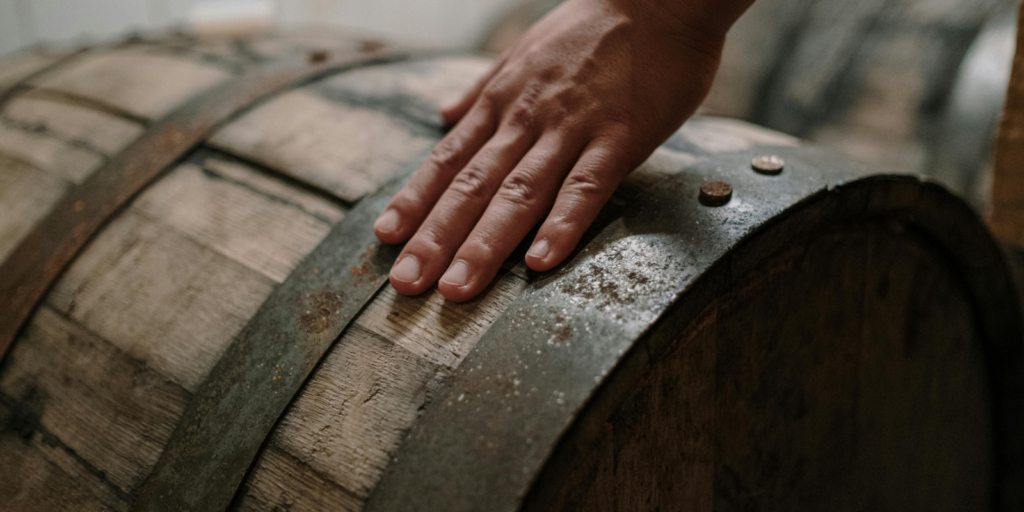
The staves are sorted, fitted, curved, and assembled. The cooper adjusts and shapes, intervening in a process already set in motion by the material itself. And while tradition here is the foundation, it is not static. Certain steps have been quietly redesigned (optimised postures, refined interlocking systems) to support the craft without diminishing it. Innovation takes its place discreetly, without displacing expertise.
These barrels go on to age the greatest wines and cognacs in the world: Château Margaux, Domaine de la Romanée-Conti, the most prestigious houses of the region. A visit to Vicard pairs naturally with the wine and cognac estates we work with across our itineraries, offering clients who love wine a rare behind-the-scenes perspective on what shapes the bottles they already know.
And while the barrel may appear simple, it is in reality a subtle agent of time. It doesn’t merely store. It shapes.
Pochet du Courval, Glass & Perfume
In a different world, but with the same underlying logic, glass extends this culture of craftsmanship.
At workshops like Pochet du Courval, the bottle is never a simple container. It is a precision piece: born from sand heated to extreme temperatures, shaped as it flows, then worked in proportions where every variation counts. Thickness, transparency, weight in the hand: nothing is left to chance.
Because here, the bottle does not simply protect its contents. It defines them.
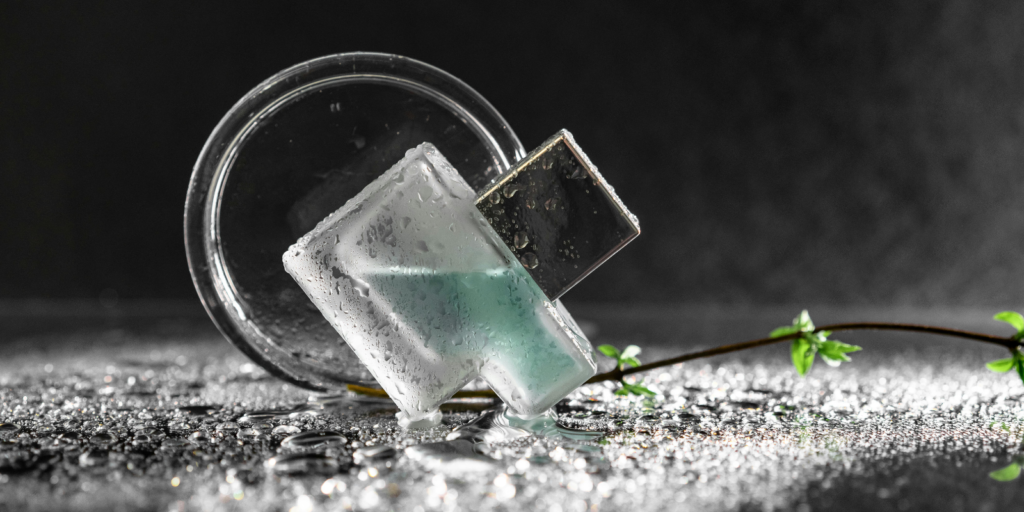
Even before a fragrance is perceived, the bottle imposes an image. It suggests an identity, a first silent reading of what it holds. The glass retains the trace of its own transformation: an unstable material brought, through skill and attention, into something perfectly controlled.
For clients who want to engage with this world more personally, we can build in the experience of creating their own fragrance, selecting scents linked to memory, place, and preference, and leaving with something genuinely unique to them. It is one of those experiences that is difficult to explain in advance and impossible to forget afterwards.
Baccarat, Crystal & the Decanter
Crystal occupies its own essential place in this story.
In workshops like those of Baccarat, the decanter is shaped from molten crystal heated to extreme temperatures, a living, almost unpredictable material where the slightest delay or excess permanently alters the form. There is no correcting a mistake. The gesture has to be right.
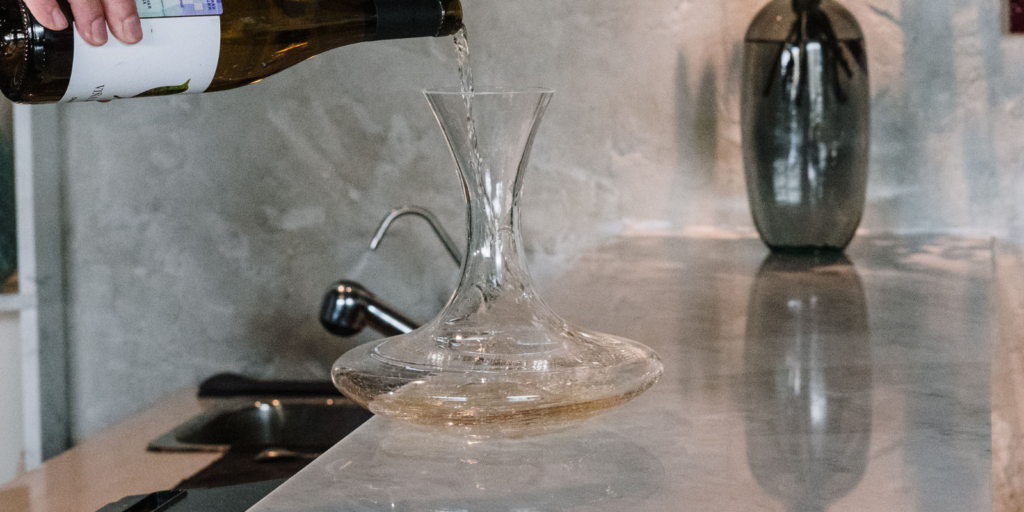
The decanter’s role is equally precise. It receives the wine at a particular moment: the moment it opens, breathes, and begins to express itself fully. It is the object that stands between preservation and revelation.
For wine-loving clients, tasting the same wine with and without a decanter, or across decanters of different shapes and materials, can be a quietly revelatory experience. The kind that reframes something familiar entirely.
The Object That Reveals
Three materials. Three worlds. One underlying idea.
The barrel, the bottle, the decanter: each one accompanies what it contains, protects it, and ultimately helps it to express itself. In the wood of the barrel, time works as much as the hand. In the glass of the bottle, form shapes perception before the senses are even engaged. In the crystal of the decanter, the wine finds a second life.
These are not simple vessels. They are the visible traces of a craftsmanship that does not seek to disappear behind modernity, but to coexist with it.
At Découvertes DMC France, this more layered dimension of France (materials, gesture, time) is something we integrate naturally into the itineraries we design. Whether your clients are travelling through the wine regions, spending time in Paris, or building a longer journey across several parts of the country, these experiences add a depth that is difficult to replicate and easy to remember.
Send your requests to , we’d love to help you build something around them.