

5 min read
Spring is finally here, and if you follow us on social media, you already know we’ve been counting down the days.
At Découvertes DMC France, we’re absolutely ready to step outside, soak up the sun, and linger a little longer in the kind of places that make France feel endlessly generous. And since we firmly believe that gatekeeping beautiful spots is simply not our style, we’re sharing five of our favourite gardens to add to spring itineraries.
From a wild naturalist’s retreat in Provence to a tropical paradise on the Côte d’Azur, these are not your average public parks. Each one carries a story, a particular atmosphere, and the kind of layered beauty that rewards those who take the time to explore properly.
The Arboretum of Chèvreloup, near Versailles
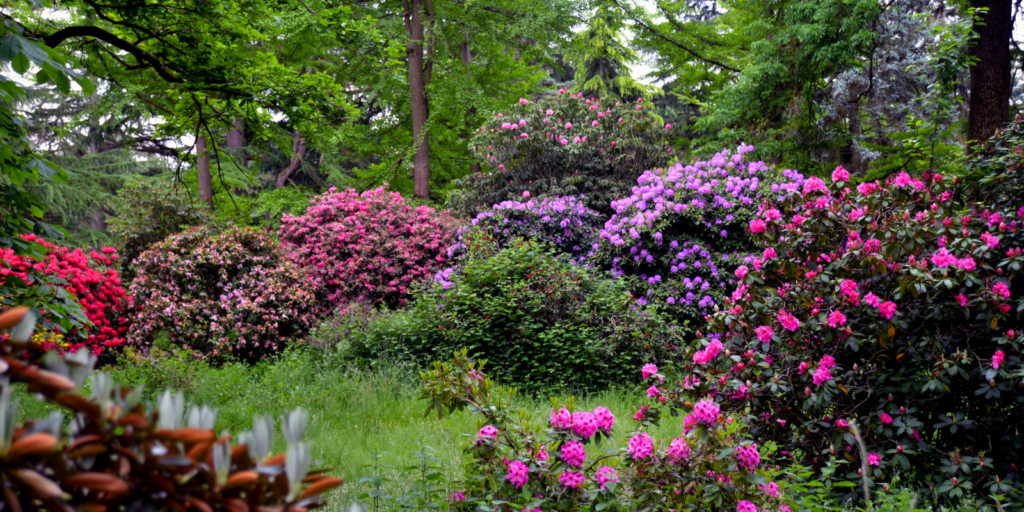
Less well-known than its neighbours, the Arboretum of Chèvreloup occupies the former hunting grounds of Louis XIV, just a short distance from the Palace of Versailles. Managed by the National Museum of Natural History (Muséum national d’Histoire naturelle), its 120 hectares are organised by geographical origin: European, Asian, and American tree collections laid out across a quietly spectacular landscape.
In autumn, the colours are extraordinary.
In spring, it is a more restrained kind of beauty: the awakening of ancient specimens, the still pond at the heart of the arboretum attracting a surprising variety of birdlife, and an overall sense of space and silence that is increasingly rare.
For clients seeking an experience that feels genuinely off the beaten path, even near one of France’s most visited destinations, this is exactly the kind of hidden layer that makes an itinerary memorable.
The Botanical Garden (The Jardin des Plantes), Paris
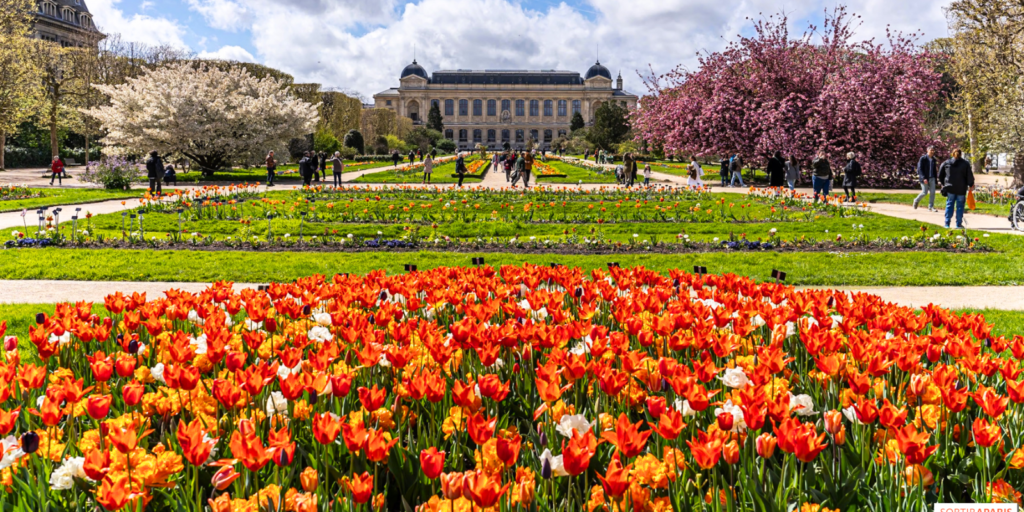
One of the oldest botanical institutions in the world, the Botanical Garden was founded in the 17th century as a royal medicinal garden. Today, it remains one of Paris’ most quietly compelling spaces. A place where science and beauty exist side by side without contradiction.
Wander through the Ecole de Botanique, descend into the alpine garden through a small underground corridor, or lose yourself along the grand central avenue with its clipped plane trees and seasonal floral displays. This spring, in celebration of the National Museum of Natural History’s (Musée national d’Histoire naturelle) 400th anniversary, the planting scheme draws inspiration from the famous velins (botanical illustrations by Pierre-Joseph Redouté and Nicolas Robert) with compositions of anemones and tulips that feel more like living paintings than standard bedding plants.
For clients who enjoy cultural depth alongside natural beauty, the Botanical Garden offers an experience that is genuinely irreplaceable.
The Val Rahmeh Botanical Garden, Menton
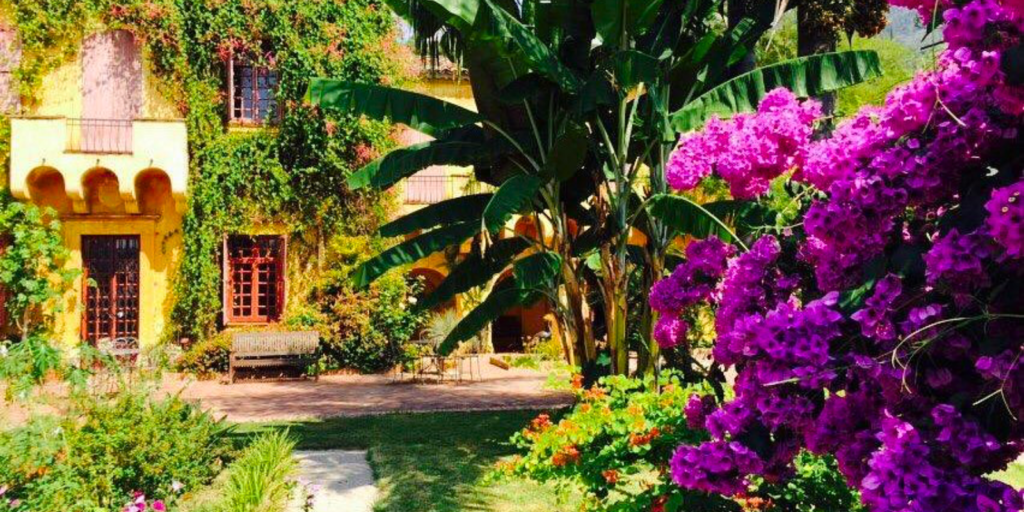
On the far eastern edge of the French Riviera, in the bay of Garavan, the Val Rahmeh Botanical Garden is a place that seems to operate by its own climatic logic. The microclimate here is exceptional: warm, sheltered, and humid enough to support plant species from across the tropics that would not survive anywhere else in France.
Originally developed in the 1920s by British botanical enthusiasts and later donated to the French state, Val Rahmeh is now part of the remarkable gardens network.
Descending through terraced levels of the former agricultural estate, visitors move between a pergola draped in shade, a tropical forest reconstruction, a water garden covered in giant Victoria cruziana water lilies, a citrus orchard, and groves of giant and coloured bamboo. The majestic alley of Canary Island date palms at the entrance sets a tone of almost theatrical elegance.
For clients staying on the Riviera, particularly those who have already seen the obvious highlights, Val Rahmeh offers something that feels genuinely unexpected.
The Harmas of Jean-Henri Fabre, Sérignan-du-Comtat
This one is for the curious, the detail-oriented, and those who appreciate the idea that a great place can emerge from a single person’s obsession with understanding the world.
Jean-Henri Fabre was a naturalist, teacher, and prolific writer who resigned from the French education system under somewhat scandalous circumstances (a lecture on plant sexuality attended by young women) and retired to a patch of dry, stony land in Provence.
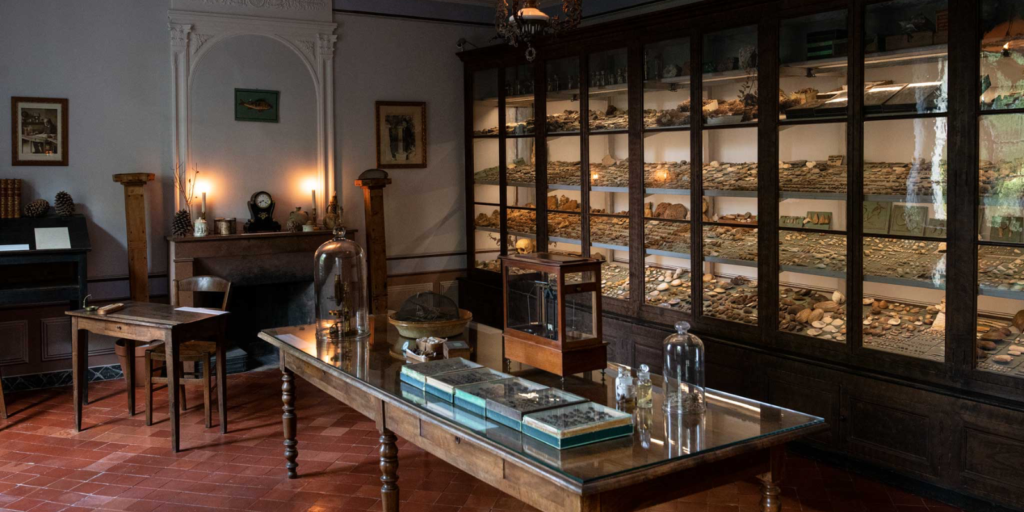
He called it his harmas, a Provençal word for untamed ground, and over decades transformed it into a living laboratory of entomology, planting thyme and rosemary to attract the insects he would observe, study, and write about in his celebrated Souvenirs Entomologiques.
Now managed by the Muséum Harmas Jean-Henri Fabre, the property has recently been sensitively restored.
The lilac alley, the fountain garden, the cabinet of curiosities that served as his study ; it all feels remarkably intimate.
For clients who travel not to see the world’s most famous sights, but to understand something about how extraordinary things grow from ordinary places, the Harmas is quietly unmissable.
The Paris Zoological Park (Parc Zoologique de Paris), Vincennes
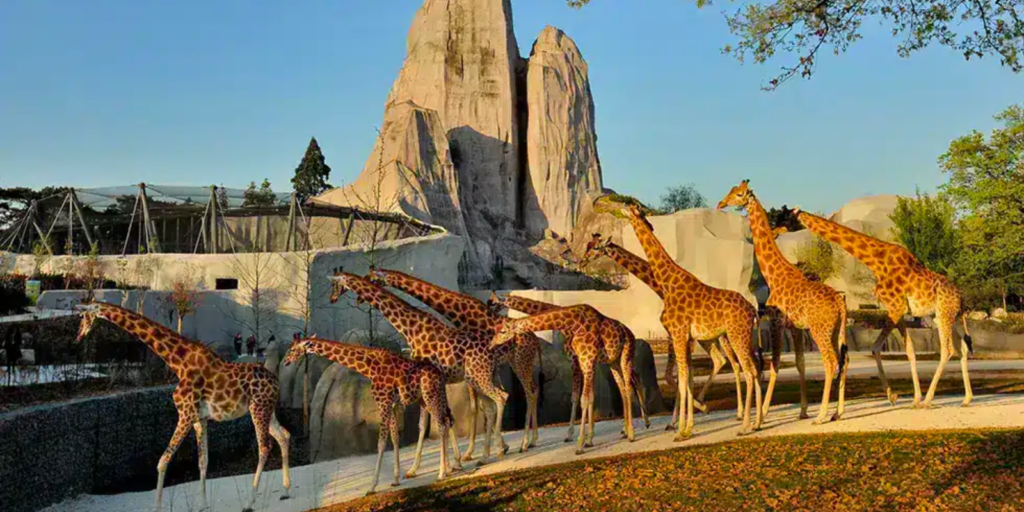
Just east of the city, the Paris Zoological Park, affectionately known as the Zoo de Vincennes, was entirely reimagined and reopened after years of redevelopment. What makes it remarkable is not the collection of animals per se, but the way the space has been conceived: five distinct biozones (Patagonia, Africa, Europe, Amazonia-Guiana, and Madagascar), each recreating the habitat conditions of its resident species as closely as possible.
The great greenhouse alone, housing nearly 4,000 plants including some that feel almost prehistoric in their scale, is worth the visit.
For families travelling with children, or for clients who appreciate careful landscape design as much as wildlife, this is a surprisingly sophisticated afternoon.
A Note on Curation
What connects these five gardens is not their scale or their fame, but the quality of attention that has shaped them over time.
Each one rewards slow exploration.
Each one carries a distinct identity, scientific, artistic, historical, or ecological, that goes well beyond a pleasant walk in the sunshine.
At Découvertes DMC France, we design itineraries around exactly this kind of depth. Whether your clients are spending a few days in Paris, exploring the south of France, or building a longer journey across multiple regions, we can help you integrate these gardens into an experience that feels cohesive, meaningful, and genuinely tailored.
Send your requests to ; we’d love to help you build something beautiful for this season.